
Sooty Blotch ( Gloeodes pomigena )

1. Introduction
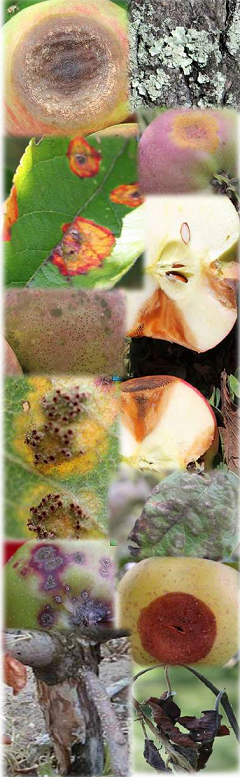
Blotch can infect the fruit, leaves, and twigs of apple and crabapple trees. Leaf spots occur on the veins, midribs, and petioles (leaf stems) as long, narrow, slightly sunken, light-colored lesions. These contain several dark dots–the fruiting structures (pycnidia) of the fungus. When petiole infections are numerous, leaves might drop off.
2. Symptoms

3. Damage caused

Sooty blotch appears as greenish irregular blotches or patches on the fruit surface. Individual blotches can grow together to form larger infected areas. Sooty blotch fungus is common in the Eastern U.S. but rare in the West. Fruit may be infected by heavy spore dissemination on twigs of various wild trees. On apples, clusters of short dark hyphae make a thallus on the cuticle and this appears as a sooty brown or black blotch ¼ inch in diameter. Numerous spots may completely cover the apple. The disease develops in rainy summer weather when nighttime temperatures and overall humidity remains high. It infects fruit from after petal fall through late summer.
4. Confused with
Powdery mildew
5. Disease cycle

6. Pathogen biology
7. Management


Conceptualized, Designed and Developed by Shabir Ahmad Mir, Sr. Computer Programmer, KVK (Farm Science Centre), Kulgam, Kashmir.
EVALUATION & VALIDATION COMITTEE